

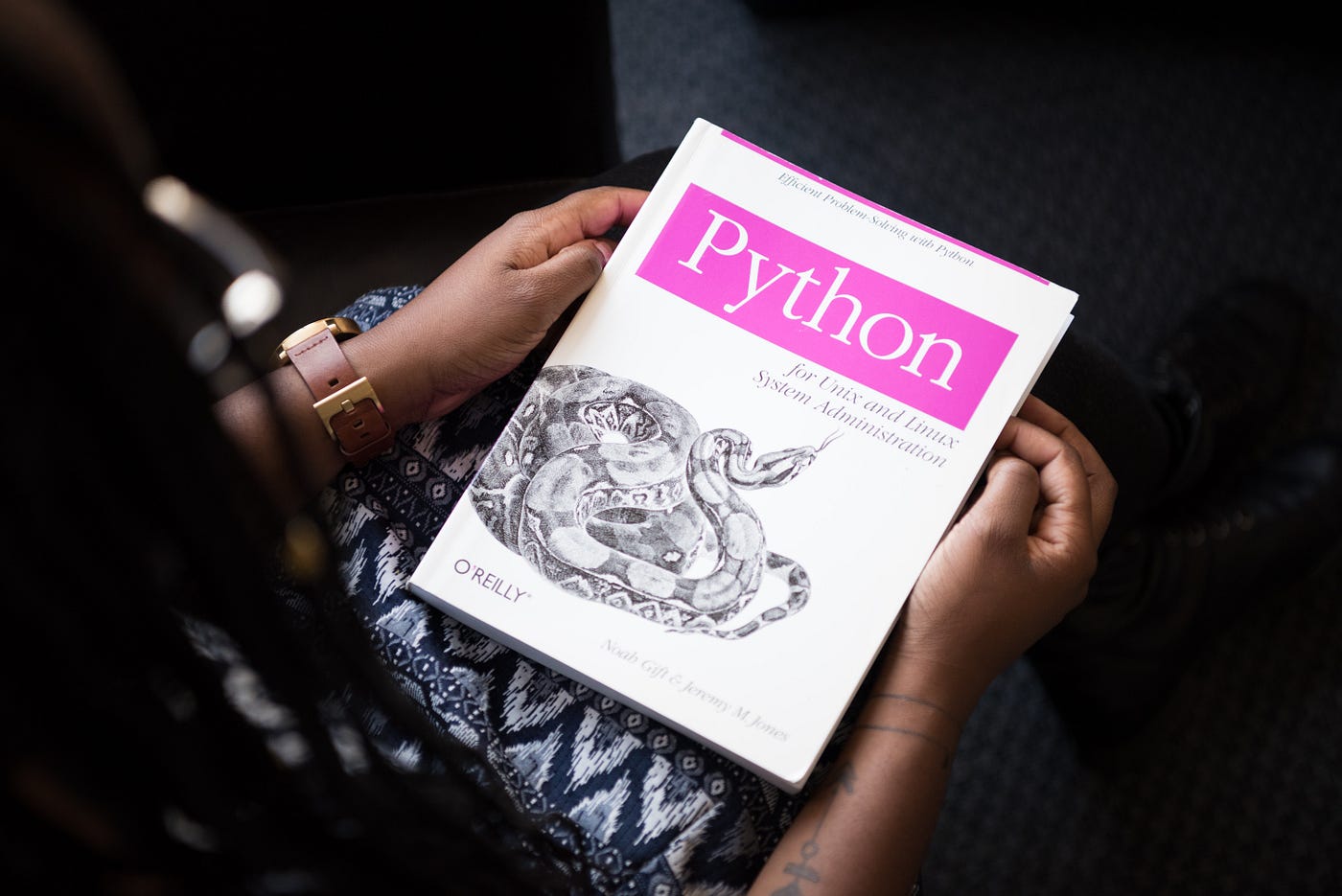
The best book for Python for absolute beginners is Python Crash Course by Eric Matthes. It is hands-on, clear, and gets you building projects fast. For intermediate learners, Fluent Python by Luciano Ramalho is the go-to choice for writing code that actually looks and feels Pythonic.
But the right book depends on where you are and where you’re headed. Here’s a guide broken down by learning stage and goal.
How These Books Were Selected
- Clarity of explanation – no unnecessary jargon for beginners; appropriate depth for advanced readers
- Project-based learning – hands-on beats theory-only every time
- Current content – Python 3 compatible, updated for modern practices
- Community trust – consistent high ratings across developer communities
Top Python Books at a Glance
| Book | Author | Level | Best For | Price Range |
| Python Crash Course (3rd Ed.) | Eric Matthes | Beginner | First-timers, project-based learners | $25-$35 |
| Automate the Boring Stuff | Al Sweigart | Beginner | Practical automation tasks | Free online / ~$30 |
| Learn Python the Hard Way | Zed Shaw | Beginner | Drill-based learners who like repetition | $30-$40 |
| Fluent Python (2nd Ed.) | Luciano Ramalho | Intermediate/Advanced | Writing idiomatic, clean Python | $50-$65 |
| Python Tricks | Dan Bader | Intermediate | Leveling up from basics | $25-$30 |
| Effective Python | Brett Slatkin | Intermediate/Advanced | Writing better Python professionally | $40-$50 |
| Python for Data Analysis | Wes McKinney | Intermediate | Data science, pandas, NumPy | $45-$60 |
| Hands-On ML with Scikit-Learn | Aurelien Geron | Advanced | Machine learning practitioners | $55-$70 |
Best for Absolute Beginners: Python Crash Course
Eric Matthes wrote this book the way a good teacher would explain things – step by step, with immediate application. By the end of Part 1, you’ll understand variables, loops, functions, and classes. Part 2 walks you through three full projects: a game, a data visualization, and a web app.
What makes it stand out is pace. It doesn’t baby you, but it never loses you. Third edition is current through Python 3.11.
Runner-up:
‘Automate the Boring Stuff with Python’ by Al Sweigart is completely free at automatetheboringstuff.com and is perfect if you want to learn by solving real tasks – web scraping, Excel automation, PDF handling, and more.
Best for Intermediate Learners: Fluent Python
Luciano Ramalho’s Fluent Python is the book that separates developers who write Python from developers who write good Python. It covers data models, sequences, decorators, concurrency, and the internals that most tutorials skip entirely.
Fair warning: it’s dense. This is a book you sit with, not skim. But every chapter pays off.
Best for Data Science and ML
‘Python for Data Analysis’ by Wes McKinney (the creator of pandas) is the definitive resource for data manipulation and analysis. If you’re heading into data science, this is required reading alongside NumPy documentation.
For machine learning specifically, Aurelien Geron’s ‘Hands-On ML with Scikit-Learn, Keras and TensorFlow’ is the most practical book in the space – theory balanced with real implementation.
Best for Web Development
Interestingly, no single Python book dominates web dev. Most Flask and Django practitioners learn from the official documentation plus ‘Flask Web Development’ by Miguel Grinberg (Flask) or ‘Django for Beginners’ by William Vincent (Django). Both are worth pairing with Python Crash Course’s web app chapter as a foundation.
Best Free Resource
| Resource | URL | Best For |
| Automate the Boring Stuff | automatetheboringstuff.com | Practical scripting, beginners |
| Official Python Tutorial | docs.python.org/3/tutorial | Language fundamentals |
| Real Python | realpython.com | Articles + video tutorials, all levels |
| Python for Everybody (Coursera) | coursera.org/specializations/python | Structured course, free to audit |
3 Questions to Pick Your Book
Ask yourself these before buying anything:
- Am I a complete beginner or do I already know another language? Beginners: Python Crash Course. Experienced devs: Fluent Python.
- Do I have a specific goal (data science, automation, web)? Pick the domain-specific book and supplement with a general one.
- Do I learn better by reading or doing? Prefer doing: Automate the Boring Stuff. Prefer structured explanation: Python Crash Course.
Final Picks by Use Case
| Your Goal | Best Book |
| Just getting started | Python Crash Course – Eric Matthes |
| Learning while solving real problems | Automate the Boring Stuff – Al Sweigart (free) |
| Writing cleaner, more professional code | Fluent Python – Luciano Ramalho |
| Breaking into data science | Python for Data Analysis – Wes McKinney |
| Machine learning / AI | Hands-On ML – Aurelien Geron |
| Leveling up from intermediate | Effective Python – Brett Slatkin |
One last thing: the best Python book is the one you actually finish. Pick one, commit to it, and build something with what you learn. That matters more than which title is on the cover.
