

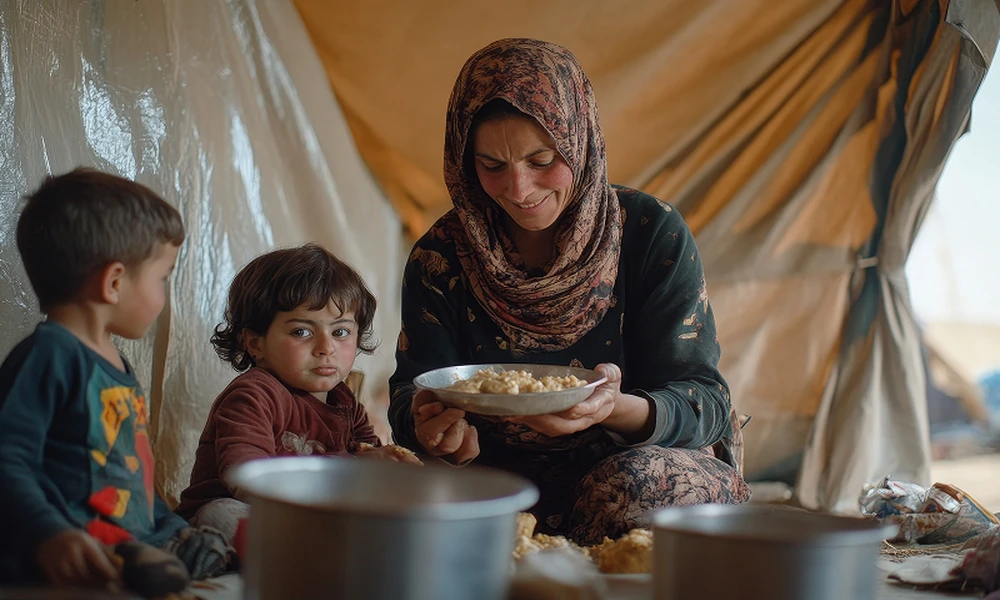
Image Recommendation: A caregiver and child in Yemen receiving a food or aid parcel from a relief worker, warm and respectful tone, no overly distressing imagery.
On August 2025, the UN’s humanitarian office estimated that 18 million people in Yemen, roughly half the country’s population, would face acute hunger within a month. Children make up a large share of that number, and many of them have also lost a parent to a conflict that has run for over a decade.
What the Headline Figures Don’t Show
- About 80% of Yemen’s population depends on some form of humanitarian aid to get by
- 8.4 million people lack access to essential healthcare services
- The 2025 response plan had received only 17% of the $2.48 billion it needed, as of that August report
- At least one in five families faces a near-total shortage of food and other essentials
What a Monthly Orphan Sponsorship Typically Covers
An orphan charity or sponsorship works differently from a one-off donation. Rather than funding a single response to a single event, it commits to covering a child’s recurring needs over time, which usually means a combination of schooling costs, basic healthcare, food, and support for whichever relative or guardian is raising them. The specific breakdown varies by programme and by what a child actually needs month to month, which is part of why sponsorship tends to be reviewed and adjusted rather than fixed at a flat rate forever.
Why Yemen’s Orphan Population Keeps Growing
Years of conflict, together with the economic collapse that’s followed it, have left a generation of children without one or both parents, and the number hasn’t levelled off. Displacement compounds the problem, since a child who’s lost a parent and then been displaced from their home is also cut off from whatever informal support network, extended family, neighbours, a local mosque, might otherwise have stepped in. Formal sponsorship exists largely to fill that gap when it can’t be filled locally.
It’s worth being clear that none of this is unique to Yemen; the same pattern shows up anywhere prolonged conflict and economic collapse overlap. What’s specific to this crisis is the scale and how long it’s dragged on, which is why aid agencies keep describing it in terms usually reserved for the most severe emergencies on record.
What a Yemen Emergency Appeal Responds to Right Now
An emergency appeal works on a different timeline entirely. Where sponsorship is ongoing and individual, choosing to donate to Yemen through an active appeal usually funds the immediate response, food parcels, clean water, and emergency medical care for whichever crisis is most acute at that moment. With 41,000 people estimated to reach famine-level food insecurity by around September last year, according to that same OCHA assessment, appeals like this exist to move resources quickly rather than build a long-term relationship with one recipient.
Choosing Between the Two Isn’t Really a Choice
Sponsorship and an emergency appeal aren’t competing for the same donation; they’re answering two different questions. One asks how to support a specific child reliably over years. The other asks how to respond to a crisis that can’t wait for a slower, individual relationship to form. Most of the Yemenis both programmes reach need exactly this combination: the appeal keeps a family fed through the worst of a crisis, while sponsorship gives a child without a parent something closer to stability once the immediate emergency has passed.
Treating the two as rivals for the same donor dollar misses what each one is actually built to do. A household can receive emergency food through an appeal this month and still have a sponsored child in it next year; the timelines and purposes simply don’t overlap the way a single either-or choice would suggest.
What Happens After a Donation Goes Through
Registered relief organisations operating in conflict zones like Yemen typically route funds through local partners on the ground, since direct access is often limited or unsafe for international staff. That layer of local delivery is standard practice across the sector, not unique to any one charity, and it’s generally paired with some form of reporting back to donors on how funds were used, even if the exact format varies between organisations.
For a sponsorship specifically, that reporting often includes periodic updates on the child, how they’re doing in school, whether their circumstances have changed, so the relationship feels less like a one-time transaction and more like something a donor can actually follow over time.
Two Questions Donors Often Ask
Does sponsoring one child mean the money only reaches that individual?
Not always directly. Many programmes support the child’s household or community alongside the individual, since isolating support to one child while a family around them struggles rarely improves that child’s situation on its own.
Is a one-time appeal donation less meaningful than ongoing sponsorship?
No, they serve different purposes. An appeal donation can be the difference in an acute crisis right now, while sponsorship addresses what comes after. Neither replaces the other.
Half a country facing hunger is a hard number to sit with, and it’s fair to wonder where a single donation actually lands in that picture. Contact Global Ehsan Relief to ask exactly that before deciding where to give.
