

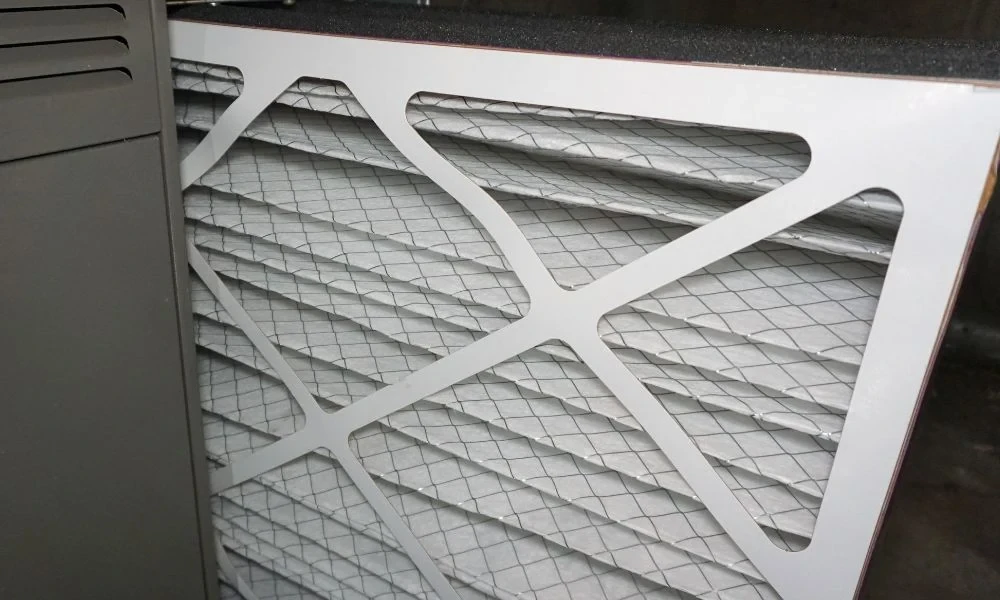
Most homeowners replace a filter when they remember it, which turns out to be not very often. That single habit quietly inflates heating bills, burns out blower motors, and turns what could have been a $15 fix into a $400 repair call. The furnace filter is the cheapest, most ignored component in your entire heating system, and it has an outsized impact on everything downstream from it.
This isn’t a lecture about changing your filter every 30 days. It’s about understanding exactly what happens when you don’t, so you can decide whether the money you’re saving by putting it off is actually money you’re saving at all.
Why Your Heating Bill Is the First Place to Look
Space heating is the single biggest energy expense in most homes. According to the U.S. Department of Energy, space heating accounts for about 45 percent of the average American family’s energy bills. That means the efficiency of your furnace isn’t a minor detail. It’s the main event on your utility statement every winter.
When a filter gets clogged, the blower motor has to work harder to pull air through the system. That extra effort shows up as higher electricity consumption before any other symptom appears. Your house might feel fine. The thermostat still hits its target. But the furnace is running longer cycles and drawing more power to do it. You won’t notice until the bill arrives.
A rough way to check your own situation: compare your gas or electric bill from this January to the same month two years ago. If your home size and thermostat habits haven’t changed but the bill has crept up, the filter is a logical first suspect. It won’t be the only answer, but it’s the cheapest thing to rule out.
The Filter Neglect Cost Ladder
Neglecting a furnace filter doesn’t cause one problem. It causes a sequence of them, each more expensive than the last. Think of it as a ladder you climb one missed filter change at a time.
- Month 1 to 3 past due: Airflow drops modestly. The blower runs a little longer per cycle. Your bill ticks up a few dollars. Nothing alarming.
- Month 4 to 6 past due: Dust bypasses the clogged filter and settles on the evaporator coil and heat exchanger. Heat transfer efficiency drops. The furnace overheats slightly and the limit switch starts cycling the burner off early. Your home takes longer to warm up.
- Month 7 to 12 past due: The blower motor is now under sustained mechanical stress. Bearings wear faster. The heat exchanger expands and contracts under thermal stress more than it was designed to handle. You may start hearing a low hum or a brief rumble before the burner kicks on.
- Beyond one year: The limit switch fails from repeated cycling. The blower motor seizes or burns out. A cracked heat exchanger becomes a real risk. What began as a $15 filter is now a $200 to $600 repair, or a conversation about full system replacement.
That ladder is the reason furnace repair experts consistently trace back breakdowns to maintenance gaps rather than equipment defects. The furnace didn’t fail. It was worked to failure.
What AFUE Has to Do With Filter Condition
Your furnace has an AFUE rating, which stands for Annual Fuel Utilization Efficiency. A rating of 80% means 80 cents of every dollar in fuel actually heats your home. A 95% AFUE unit loses only a nickel per dollar to exhaust. That gap matters.
What most people don’t realize is that AFUE is a rated efficiency under clean, ideal operating conditions. A dirty filter degrades real-world performance below that rated number. You might have paid for a high-efficiency furnace and be running it at the equivalent of a mid-efficiency unit because the airflow restriction forces longer, less efficient cycles. The nameplate rating on the side of the unit tells you the ceiling, not your actual outcome.
Keeping the filter clean is one of the simplest ways to make sure you’re actually getting the efficiency you paid for.
The Concrete Math: A $136-a-Month Scenario
Here’s a real-texture example to anchor this. Say you’re running a 3,000-square-foot home in a cold-climate region on natural gas. Your average winter heating bill runs $136 a month. That’s not unreasonable given that according to the U.S. Energy Information Administration, space heating and water heating collectively accounted for 62% of household energy consumption, though their share of costs runs somewhat lower due to fuel mix.
A filter that’s 40% restricted from dust buildup can force the blower to consume meaningfully more electricity per cycle. Even a conservative 8% increase in your electricity load adds around $11 to $14 a month during peak heating season. Over a five-month winter, that’s $55 to $70 in pure waste, before you factor in any accelerated wear on components.
Contrast that with a standard 1-inch pleated filter at roughly $8 to $12 per change every 60 to 90 days. The math resolves itself quickly. The filter always wins.
Visible Signs You’re Already Past the Cheap Fix
There are a few things you can watch for at home that signal the filter neglect has already moved into more expensive territory:
- Dust rings around your supply vents. That’s debris bypassing the filter and depositing on the duct edges.
- A faint burning smell for the first few minutes after the furnace kicks on. This usually means dust has settled on the heat exchanger and is briefly scorching off each cycle.
- Short cycling: the furnace starts, runs for 2 to 4 minutes, shuts off, and repeats. That’s often the limit switch doing its job to prevent overheating, but it signals a real underlying issue.
- Uneven heat distribution across rooms. When airflow is restricted, the rooms farthest from the air handler often go cold first.
Any one of those symptoms means you’re past filter-replacement territory and into diagnostic territory. Don’t just swap the filter and hope. At that stage, have a technician verify the heat exchanger and limit switch haven’t taken damage.
A Practical Filter Maintenance Checklist
Simple systems get followed. Complicated ones get skipped. Here’s the version that actually works in a real household:
- Set a recurring phone reminder for every 60 days from October through March, every 90 days for April through September.
- Buy filters in a 6-pack. A single filter in the closet creates the friction to skip changes. Six sitting next to the furnace removes it entirely.
- When you change the filter, take 30 seconds to look at the blower compartment through the access panel. If you see dust buildup on the blower wheel, that’s a sign past filters ran too long.
- Write the date on the cardboard frame of each new filter with a marker. One glance tells you how old the current one is without trying to remember.
- Schedule a professional tune-up once a year, ideally in September before the heating season starts. A technician will clean the heat exchanger, verify the limit switch, check the flue, and measure combustion efficiency. This is the step that filter changes can’t replace.
Annual professional service isn’t just good maintenance practice. The Center for Climate and Energy Solutions notes that heating is the largest energy expense in most homes, accounting for 35 to 50 percent of annual energy bills in colder parts of the country, with Americans spending $73 billion on space heating each year. That scale of spending deserves more than hoping the system holds together.
When to Stop Diagnosing and Just Call Someone
There’s a point where self-diagnosis stops being useful. If you’ve replaced the filter, the short cycling continues, and your heating bills are still higher than they were two winters ago, you’re past routine maintenance. You need eyes on the heat exchanger, the limit switch, the flue, and the combustion chamber. Those components require instruments and training, not a flashlight and a YouTube video.
The same goes for any smell of gas, any tripped carbon monoxide detector, or any rattling that changes pitch when the blower speeds up. Those aren’t filter problems. Don’t treat them like filter problems.
The filter is your first line of defense and the cheapest tool you have to protect an expensive system. Use it consistently, and you protect everything behind it. Ignore it long enough, and you’ll spend the winter having very expensive conversations instead of very comfortable evenings.
