

Anyone who has spent a spring in Frisco, McKinney or Plano knows the sky keeps a schedule. Somewhere between March and June a storm cell rolls in from the west, the light turns a strange green, and for ten loud minutes the roof becomes the most important thing you own. Most homeowners only think hard about what is up there after it has already taken a beating.
More North Texas families now make that call before the next storm instead of after it, and High Performance Roofing in Frisco has watched the request change from “put back what I had” to “give me something that holds up.” As a Malarkey Certified Premium contractor that also works on solar and windows, the company installs a range that runs from polymer shingles to DECRA stone coated steel, which happens to be the exact spread of choices worth comparing.
The Storm Behind the Shopping List
Hail is not a single hazard. Pea sized stones in a gusty storm scrub granules off the surface. Golf ball stones falling straight down bruise the mat underneath. Large hail pushed sideways by strong wind cracks edges and lifts laps. Then summer arrives and the sun bakes whatever survived, with dark roof surfaces running far hotter than the air around them. Any material on a Collin County home has to absorb impact, tolerate heat and stay fastened, all at once.
The usual yardstick is UL 2218, a lab test that drops steel balls from set heights and grades roof coverings from Class 1 to Class 4. A Class 4 product survives a two inch ball without cracking. That is a meaningful bar, but the test runs at room temperature, and roofers have long noted that real hail strikes cooler materials and transfers energy differently than polished steel. Treat Class 4 as the starting line rather than a guarantee.
Rubber Folded Into the Asphalt
The most familiar upgrade is the SBS modified shingle. Styrene butadiene styrene, a synthetic rubber, gets blended into the asphalt so the shingle flexes when a stone lands and then recovers instead of fracturing. From the street it looks identical to a standard architectural shingle, which matters in the many subdivisions where HOA covenants control roof color and profile.
The trade off is that it is still asphalt. Granules still wear away, and years of Texas heat still age the material faster than a brochure suggests. Some lines add extras such as algae resistant or smog reducing granules that help break down airborne pollutants. Those are pleasant bonuses, though nobody should choose a roof for them alone.
The Middle Lane Most People Skip
Synthetic composite shingles rarely come up in neighborhood chatter, yet they solve a specific problem. Molded from engineered polymers with no asphalt at all, they imitate slate or cedar shake while weighing far less than either. Color runs through the material, so a glancing hit leaves no bright scar, and many products carry Class 4 impact ratings along with strong fire ratings.
They suit the homeowner who wants a premium look without asking framing built for shingles to carry real slate. The catch is installation. These products expand and contract with heat and need a crew that has done them before, because a careless install undoes the material’s advantages.
Steel Wearing a Stone Jacket
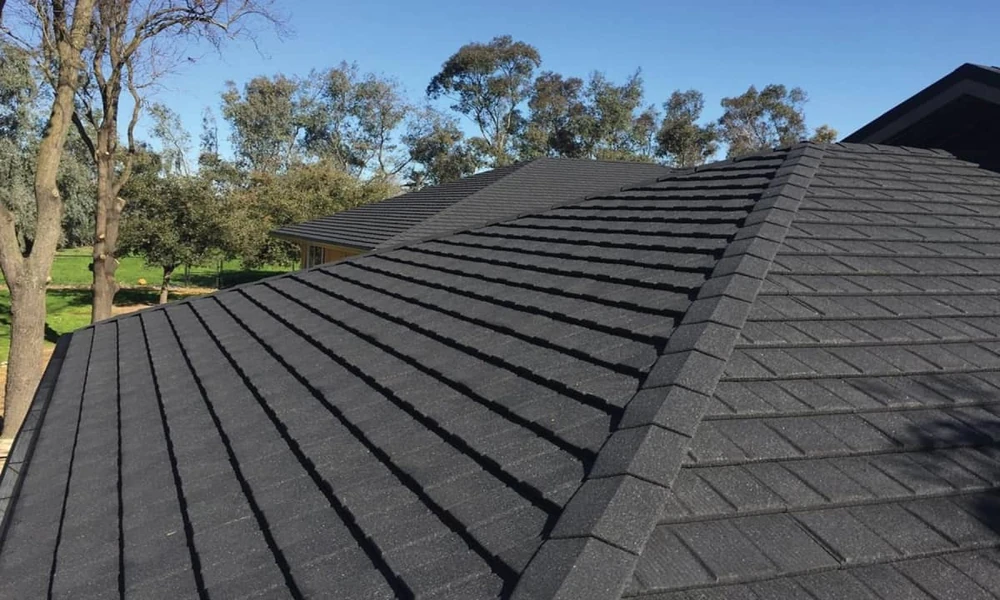
Stone coated steel panels are pressed into shake, tile or shingle shapes and then finished with granules bonded in acrylic. They are light, highly wind rated and built to last for decades. Hail that would shatter a tile usually just bounces.
Their weak point is cosmetic. A massive stone can dimple a panel without letting a drop of water through, and many Texas homeowner policies now include cosmetic damage exclusions. A dented but watertight roof may never be paid out, so reading the policy before signing a metal contract is not optional. Noise worries, on the other hand, are mostly a myth once panels sit over a solid deck and underlayment.
Three Roofs Compared
| SBS modified shingle | Synthetic composite | Stone coated steel | |
|---|---|---|---|
| Response to hail | Flexes and recovers | Absorbs impact, hides scuffs | Resists breach, may dent |
| Street appearance | Standard architectural shingle | Slate or shake look | Shake, tile or shingle profiles |
| Weight on framing | Similar to standard shingles | Light | Very light |
| Relative upfront cost | Modest premium | Higher | Highest of the three |
| Main weakness | Heat aging and granule loss | Needs experienced installers | Cosmetic denting and policy exclusions |
The Paperwork That Pays You Back
A hail resistant roof can lower premiums, but only with proof. The Texas Department of Insurance recognizes impact rated roofing for insurance credits, with Class 4 earning the largest one, though each insurer sets its own amount. After installation, the contractor completes TDI form PC068 confirming the product’s UL 2218 class. Keep a copy, keep a labeled wrapper from the bundles, and photograph the install. When a claim or a home sale comes around years later, that folder is worth more than any sales sheet.
Little Details That Decide Big Outcomes
The field material gets the attention, yet failures often start somewhere smaller. A few pieces deserve a direct question before any contract is signed.
- Ridge caps, starter strips and hip pieces should carry the same impact rating as the field, since a Class 4 roof with ordinary caps fails at its weakest line.
- Valleys and eaves benefit from self adhering underlayment where wind driven rain likes to sneak in.
- Attic ventilation needs balance between intake and exhaust, because trapped summer heat cooks any roof from the underside.
- Solar plans belong in the roofing conversation, since installing panels on an aging roof means paying later to detach and reset them.
Choosing for the House You Actually Live In
There is no single winner here, only a better fit for each situation. A family planning to sell a tract home within a few years usually gets the most from SBS shingles that keep the HOA happy and still earn an insurance credit. Someone settling into a forever house who wants character without heavy framing may find synthetic composite worth the extra spend. A long horizon, a solar plan and an insurance policy without a cosmetic exclusion tilt the math toward stone coated steel.
Whichever way the decision goes, make it on a calm day with a written scope in hand, not on the morning after the sky turns green.
