

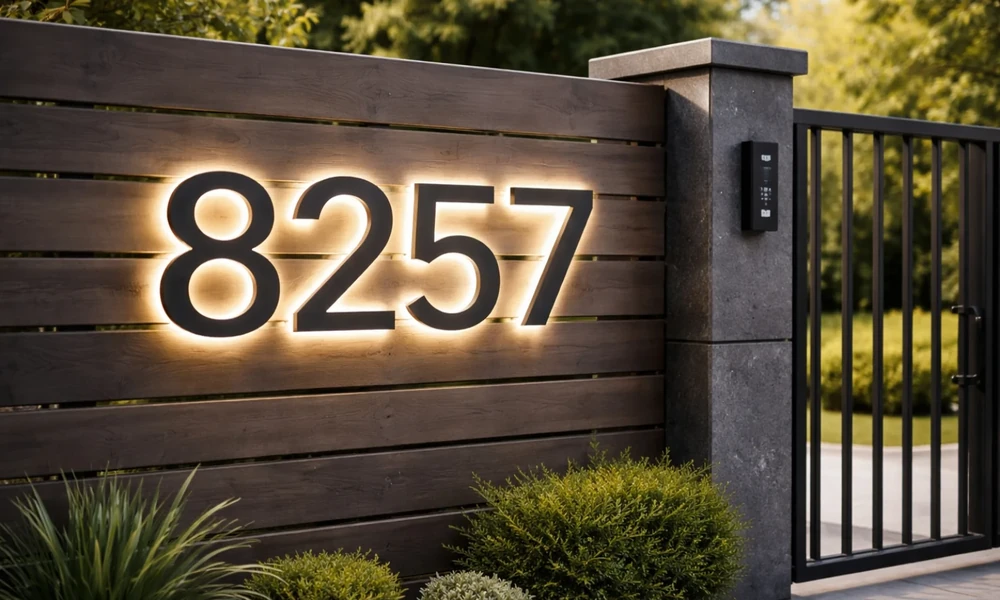
A well-designed address plaque does more than identify your home; it sets the tone before a guest ever rings the bell. Combining function and style is the key, but achieving the perfect blend is an art as much as it is a science.
Why Address Plaques Matter: Blending Function with Style
Nothing disrupts a first impression like an address number that’s hard to spot or one that clashes with the building’s personality. An address plaque must be both legible from the street and thoughtfully matched to its surroundings. Excellent design doesn’t mean sacrificing practicality; it means making both elements work seamlessly together.
The First Impression: Visibility and Aesthetic Impact
When a courier is hunting for your door on a rainy night or friends pull up for dinner, your address number serves as their first point of contact. That number should be large enough to read at a glance, yet still coordinate with the exterior materials and colors of your home. The best plaques draw the eye without overwhelming the facade.
Balancing Practicality and Design to Suit Your Home’s Architecture
Toronto’s streets are decorated with Victorian gems, bold modernist cubes, and everything in between. Selecting a plaque that matches your home’s style is about respecting the architecture and enhancing curb appeal. It’s not just about the font or finish; it’s about proportion, placement, and how the details harmonize with the rest of the property.
Toronto’s Architectural Diversity: Inspiration from Local Styles
Toronto’s neighborhoods offer inspiration from every era. You’ll see bay and gable homes with ornate brickwork, Annex-style houses with dramatic arches, and sleek glass condos. This variety invites endless creativity in address plaque design, allowing homeowners to showcase unique personalities while honoring the city’s rich architectural heritage.
Case Study 1: Choosing the Right Style for a Historic Bay and Gable Home
The bay and gable style is a Toronto classic: tall, narrow facades, prominent bay windows, and steeply pitched roofs. These homes typically feature detailed brickwork and wooden trim.
Selecting a plaque for such a home starts with honoring its original materials. Bronze or engraved brass offer timeless appeal, while natural slate can tie in with older masonry. Finishes should complement aged brick and weathered wood, avoiding anything too modern or glossy.
A recent project involved custom engraved plaques for a row of bay and gable homes. The plaques’ simple serif fonts and subtle patinas gave them a sense of permanence and history, enhancing the homes without overshadowing their character.
Case Study 2: Modern Minimalism Meets Functionality in Contemporary Homes
In contrast, Toronto’s newer builds favor clean lines, bold geometry, and pared-down palettes. Here, address plaques become an extension of the architecture’s minimalism.
Individual numbers mounted directly onto cladding offer a neat, modern look with maximum readability. Number bars (where digits are aligned on a single strip) provide cohesion and can be easier to install. For ultimate visibility at night, halo-lit numbers are a popular upgrade.
A downtown condo recently adopted this approach, installing backlit numbers that glow softly after dark. The effect? Strikingly modern, utterly functional, and perfectly in tune with the building’s glass and metal facade.
| Plaque Type | Pros | Cons |
|——————|————————————————|——————————-|
| Individual Numbers| Highly customizable, modern, scalable | Requires precise alignment |
| Number Bar | Unified look, easier to install | Less flexible for unique layouts|
| Engraved Plaque | Durable, elegant, timeless | May not suit modern facades |
| Halo-Lit | Superior nighttime visibility, dramatic appeal | Higher cost, needs wiring |
Materials and Durability: Weather-Resistant Choices That Last
Winter in Toronto is no joke. Materials must be up to the task. Bronze, brass, aluminum, stainless steel, slate, and acrylic each offer distinct advantages. Metal options resist corrosion; slate provides natural beauty; acrylic offers crisp colors and modern forms.
Matching finishes to the plaque’s environment is just as important. Sun-exposed entries benefit from UV-resistant coatings, while sheltered spots can opt for richer metals or more delicate finishes.
A multi-unit entryway downtown used a combination of stainless steel plaques and matching directories, ensuring clarity and coordination in all weather, with zero rust or fading over time.
Customization and Personalization: Making Your Plaque Unique
Not every address plaque needs to stick to numbers. Adding a street name, family surname, or an arrow can make your sign more useful and distinctive. Designers often encourage clients to share inspiration and feedback during the process, shaping a final product that feels personal.
One family requested a plaque featuring both an arrow indicating their side entrance and their surname. The result: a one-of-a-kind sign that elevated the front garden and made deliveries a breeze.
Installation Insights: Perfect Placement and Mounting Techniques
Size and placement matter as much as style. Plaques should be visible from the curb, without dominating the entrance. For homes set back from the street, larger numbers are essential. For those close to the sidewalk, a smaller, more refined plaque suffices.
Mounting isn’t a one-size-fits-all task. Brick, stone, and wood require different hardware and templates to ensure perfect spacing. Companies like Orthografica Toronto offer guidance and templates to make installation straightforward, even for trickier surfaces or multi-unit projects.
Enhancing Commercial Properties: Address Plaques as Branding Tools
Address plaques aren’t just for homes. For businesses, they serve a dual purpose: helping visitors find you and reinforcing your brand. From sleek vinyl lettering to 3D wall signs and elegant directories, good design translates into professionalism and visibility.
A Toronto clinic recently upgraded its old signage with a custom directory and nameplate system, creating a unified look that stood out on a busy street and made a polished impression on every client.
How to Get Started: From Idea to Installation
Launching a custom plaque project is easier than it sounds. The process typically starts with a photo of your facade and a few notes on preferences. Designers provide initial proposals, refine them with feedback, and handle production and delivery. For Toronto residents, expect an initial proposal within 48 hours and installation in about three weeks.
Ready to make your mark? Gather a few photos, jot down your style ideas, and partner with a design team that brings both practicality and artistry to your address plaque. In a city as diverse as Toronto, your home’s identity deserves nothing less.
