

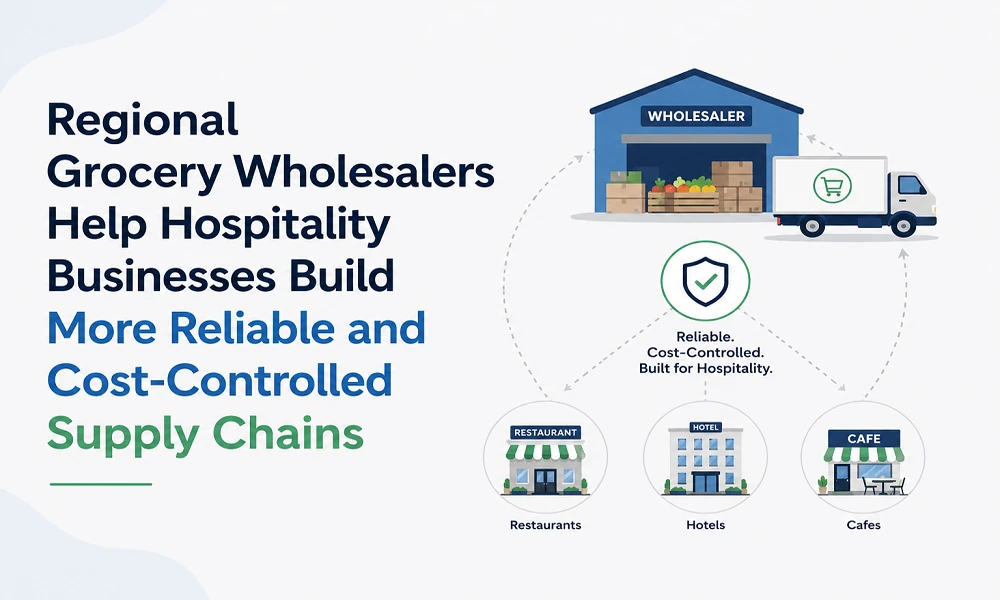
Restaurants, pubs, cafés, hotels and catering businesses depend on a steady flow of ingredients and everyday supplies. When products arrive late, prices change unexpectedly or key items are unavailable, the impact can quickly reach the kitchen, menu and customer experience.
For hospitality operators, choosing a grocery wholesaler is therefore an operational decision rather than simply a search for the cheapest products. Delivery frequency, product range, ordering convenience, local coverage and the total delivered cost all influence how effectively a venue can manage its stock and protect margins.
Reliable Wholesale Supply Keeps Hospitality Kitchens Moving
Hospitality businesses typically purchase across several categories at once. A restaurant might need chilled dairy products, frozen foods, ambient ingredients, bakery items, drinks, disposables and cleaning supplies within the same ordering cycle.
Consolidating more of these requirements with one supplier can reduce the number of purchase orders, deliveries and invoices that managers need to process. It can also make stock planning easier because fewer separate suppliers need to be coordinated before a busy weekend or event.
This is one reason regional foodservice wholesalers remain relevant even when hospitality businesses have access to large national distributors.
Frequent Deliveries Give Operators Greater Control Over Stock
Delivery frequency can be just as important as price.
Smaller restaurants, pubs and cafés may not have enough storage to receive large quantities of chilled, frozen and ambient stock in one delivery. More frequent replenishment enables these businesses to purchase closer to anticipated demand.
This approach can reduce pressure on storage capacity while helping kitchens maintain appropriate stock levels. It also provides greater flexibility when covers rise unexpectedly, menus change or seasonal demand creates a sudden increase in the use of particular ingredients.
For a hospitality operator, five deliveries spread across the working week can therefore create a very different purchasing experience from a service built primarily around infrequent bulk orders.
Online Wholesale Pricing Makes Purchasing Decisions More Transparent
Hospitality margins are affected by dozens of individual ingredient costs, so buyers need visibility before committing to an order.
Online wholesale ordering allows managers to compare pack sizes, review prices and calculate the overall value of an order without relying solely on printed price lists or telephone quotations. It also makes it easier to identify where changing brands or pack formats could reduce costs.
The most useful comparison is the total delivered cost. A product with a lower unit price may offer less value if the order attracts additional delivery charges or requires staff to travel to a cash-and-carry depot.
Free-delivery thresholds can consequently matter to independent hospitality businesses whose weekly purchasing volumes are lower than those of national restaurant groups.
Local Wholesalers Support Hospitality Businesses Across Nottinghamshire
Hospitality operators comparing food & groceries wholesalers in Hucknall should consider more than headline product prices. Delivery coverage, minimum-order requirements, online ordering, product categories and the availability of local account support can all affect day-to-day service.
The same factors matter to businesses looking for food & groceries wholesalers in Nottinghamshire. Mason Foodservice describes itself as an established foodservice wholesaler delivering food and grocery products across Nottinghamshire.
For local restaurants, cafés, pubs and caterers, regional coverage can be especially valuable when it combines regular delivery routes with a broad enough range to consolidate everyday purchasing.
A Broad Product Range Reduces the Need for Multiple Suppliers
A wholesaler does not necessarily need tens of thousands of products to meet the needs of every independent hospitality business. The more important consideration is whether its range covers the categories that the customer purchases regularly.
Mason Foodservice lists more than 1,400 product lines, covering ambient, frozen and chilled foods alongside packaging, disposables and cleaning supplies.
The company also supplies bakery products from Adkins Bakery. Mason states that it is the leading seller of Adkins Bakery items across the Midlands, giving hospitality buyers access to bakery lines alongside wider foodservice orders.
Combining food, bakery and non-food essentials in one order can simplify procurement for businesses that would otherwise need separate grocery, bakery and catering-supply accounts.
Mason Foodservice Provides a Regional Alternative to Larger UK Wholesalers
Mason Foodservice positions its service around regional hospitality purchasing. Its current service proposition includes free delivery on orders over £49, more than 1,400 products, delivery five days per week, Adkins Bakery wholesale products and lower online prices.
That creates a different experience from some of the UK’s largest foodservice wholesalers.
Bidfood, for example, supplies more than 10,000 food, drink and catering products to over 40,000 customers and operates a national network of 26 depots. It also has a Nottingham depot serving locations across the East Midlands.
Bestway Wholesale operates at another level of national scale, with 57 UK depots and relationships with around 40,000 catering and foodservice operators.
National scale can be advantageous for large groups requiring extensive ranges and multi-region distribution. Mason Foodservice offers a more focused alternative for Midlands hospitality businesses that prioritise regional delivery, a manageable product catalogue, access to Adkins Bakery products and a relatively accessible £49 free-delivery threshold.
Supplier Choice Should Reflect the Way a Hospitality Business Operates
There is no single wholesale model that suits every hospitality operation. Large hotel groups may prioritise national distribution, while an independent café or pub may value frequent local deliveries and smaller order requirements.
The strongest supplier relationship balances price, availability, delivery reliability and purchasing simplicity. For hospitality operators across Nottinghamshire, comparing these factors alongside the total delivered cost provides a more useful measure of value than product price alone.
A wholesaler that consistently keeps kitchens stocked, reduces procurement complexity and fits existing ordering patterns can become an important part of a hospitality business’s long-term operational stability.
